
Feeds:
Posts
Comments

Affirming our Potential

I believe that affirming our potential is more important than condemning our brokenness.

Many churches I have attended put a very strong I would even say an overwhelming emphasis on our brokenness. Their creeds which are chanted every Sunday point out that we are nothing but poor miserable sinners and are capable of absolutely nothing good. Besides causing inferiority complexes in those to buy into that thought it is also does very little to attract those not familiar with the true words of Jesus and the positive things he wants us to accomplish while on this earth.

Most of the “poor miserable sinner” thoughts come from Saint Paul in his many epistles. It seems that Paul, like Martin Luther that came many years later, had pitifully low self esteem that would lead naturally to this syndrome. Jesus on the other hand had different words to tell us. He constantly was affirming our potential with such words as “through the Father you can do anything”.

So, I will say again we should spend much more time knowing the positive things we can do with Christ on our side rather than fixating on the sins that we commit. Yes, we all do commit sins every day and that makes God sad but failing to recognize our potential to love God and to love our neighbors as Jesus commanded makes God even sadder.

A New Beginning….

I am back from my seven week hiatus and with some fresh insights. During this time I have stopped thinking about theology. It just became too troublesome for me to continue the way I was going.  But, I have now come to some foundational conclusions.

  1. I was just getting too drained worrying about all the different views of Christ that exist in the world today and which one, if any, is actually true.
  2. It is not up to me to “save” the rest of the world. Everyone must discover the true Christ on their own terms. I believe that I have finally come to an understanding of God that satisfies my soul. Part of this understanding  I believe came from personal revelations from the Holy Spirit. Part of it was just common sense that I previously refused to accept.
  3. I can only be accountable for myself and my actions. If others choose a different path than me they, or possibly I, will have to live with the consequences both in this life and in the possible next one.
  4. I can finally say without reservations that I believe that the Bible was written by men for men. It is man’s meager attempt to describe the nature of God. Some of the Bible is indeed inspired by God but it was not dropped from heaven. It is a work of man not God. Some of it good; some of it not so good and some of ways it is presently interpreted is quite troubling.
  5. I believe that the words in the Bible that are attributed to Jesus must take front and center above absolutely any other words in that book. Christ is God incarnate; his words are what really matters.  Everything else  in the Bible is very secondary at best and some is really not currently relevant for us at all. Some of those words attributed to Jesus may not actually have come from Jesus’ lips but that does not tarnish the dominant overall message.
  6. I believe that faith without the follow-up actions is worthless.  We must not only say the words but must also live by them. Anything else is just blowing in the wind and worthless.

So with these insights in hand I will now continue with putting my thoughts down in this blog. If anyone sees any value to my words that is wonderful but I put them down here mainly for my own benefit. I will no longer attempt to adhere to a regular schedule for this blog. I will post when the Spirit moves me. Those posts may be several times a week or several weeks apart.

I will starting now generally restrict my posts discussing things that I believe, book reviews, and memorable quotes of others. I will no longer be posting about Christian denominations, politics, theology and like minded topics.  I will first, foremost, and always strive to live my life centered on the words of Jesus alone.

Some Time Away….

I have come to the point where I need some time away from theology things. So I will stop blogging on RLL starting today. How long my hiatus will be I don’t know right now. Thanks to all of you who read me on occasions. I am humbled that you think my words are worth your time. I pray that all of you continue to keep our Lord and Savior front and center in your lives….

Go and sin no more…

Let’s look at some more red letters today:

John 8:3-11

The scribes and the Pharisees brought a woman who had been caught in adultery, and placing her in the midst they said to him, “Teacher, this woman has been caught in the act of adultery. Now in the Law Moses commanded us to stone such women. So what do you say?” This they said to test him, that they might have some charge to bring against him. Jesus bent down and wrote with his finger on the ground. And as they continued to ask him, he stood up and said to them, “Let him who is without sin among you be the first to throw a stone at her.” And once more he bent down and wrote on the ground. But when they heard it, they went away one by one, beginning with the older ones, and Jesus was left alone with the woman standing before him. Jesus stood up and said to her, “Woman, where are they? Has no one condemned you?” She said, “No one, Lord.” And Jesus said, “Neither do I condemn you; go, and from now on sin no more.

When Jesus said to the woman in the above verses “Go and sin no more” what did he mean? When he said “neither do I condemn you” he was forgiving her past sins. He did that a lot so that was expected. But what about the next phrase? What did he mean? What it just a suggestion to the woman that he knew she couldn’t keep. Was he mocking her? Not unexpectedly I tend to take his words literally. He meant for the woman to quit sinning and therefore lead a moral life (whatever that is).

I know that St. Paul said we are not capable of  ”sinning no more” but I choose to believe that Jesus thought otherwise. If he didn’t then his words above are without meaning.There are many Christians, who like St. Paul, who believe that stopping sinning is literally impossible no matter what Jesus commanded her to do. The ones who say this are constantly harping that we are all utterly miserable sinners and can do nothing but sin no matter who tells us to do otherwise. They think that everything comes from God and he doesn’t expect anything from us except total repentance. Therefore, they say, these words of Jesus were rhetorical at best.

I believe that when the Holy Spirit comes into our hearts we are expected to stop sinning as Jesus told the woman. Does that mean we are sinless from the time the Holy Spirit comes to us? Absolutely not! Yes our selfish nature at its very core is more inclined to sin than not. But with the power of Jesus, via the Holy Spirit, we more easily recognize our sins and make every attempt to lead a more righteous life. That is  even if it is not possible for us to completely stop sinning we should attempt to sin less tomorrow than we did today. We should do what Jesus says!

As a closing note I have always wondered what Jesus wrote in the sand in the above verses? Too bad the apostle John didn’t tell us. :)

Let’s continue on with our study of Jesus’ words about forgiveness. Last time we concentrated on Jesus’ forgiveness of our sins. This time we will look at what Jesus says about us forgiving others who sin against us. Let’s jump right into the red letters.

Mark 11:22-25

“Have faith in God,” Jesus answered. “I tell you the truth, if anyone says to this mountain, ‘Go, throw yourself into the sea,’ and does not doubt in his heart but believes that what he says will happen, it will be done for him. Therefore I tell you, whatever you ask for in prayer, believe that you have received it, and it will be yours. And when you stand praying, if you hold anything against anyone, forgive him, so that your Father in heaven may forgive you your sins.

Matt 18:32-35

“Then the master called the servant in. ‘You wicked servant,’ he said, ‘I canceled all that debt of yours because you begged me to.  Shouldn’t you have had mercy on your fellow servant just as I had on you?’ In anger his master turned him over to the jailers to be tortured, until he should pay back all he owed. This is how my heavenly Father will treat each of you unless you forgive your brother from your heart.”

Luke 6:37-38

“Do not judge, and you will not be judged. Do not condemn, and you will not be condemned. Forgive, and you will be forgiven. Give, and it will be given to you. A good measure, pressed down, shaken together and running over, will be poured into your lap. For with the measure you use, it will be measured to you.”

Of course, one of the obvious other places where Jesus mentions forgiving others is in the most spoken prayer in Christianity and that is the Lord’s Prayer. In that prayer we say “forgive us our sins as we forgive those who sin against us.” I have covered these words several times on this blog and in this sense I seem to take his words more literally than many “Literal and Inerrant” advocates. It is hard to take some other meaning to our forgiving others when Jesus repeatedly tells us otherwise.

These verses seem to say that there are pretty severe consequences for us not forgiving our neighbors when they sin against us. The last verse is pretty straight forward. The measure you use in forgiving others is what Jesus will use in forgiving you! This brings to mind the post I did about a month ago entitled “If God is Love where does hate come from?” The consequences of our lack of forgiving others is sometimes hate. As we know when hate takes over a person it is about as far from Jesus’ words of love as you can get.

Let’s close out this post with the same questions as the last one. What are the consequences of not forgiving others? Is it, despite our faith, an issue blocking us from heaven either permanently or for a period of time? I don’t know but and I don’t want to find out at the gates of heaven so I will do everything I can to forgive others so that Jesus will forgive me my many sins. I don’t want to rely on faith alone without actions to back it up. But then to me trying to live my life on this earth as Jesus taught us is almost as important as my eternity with our Heavenly Father. I believe earth is a staging area for heaven so that each of us can discover just where our place is to be in eternity. Or as some say it is to determine whether we are sheep or goats.  God didn’t put us on this earth to simply sit back and wait for our entrance to heaven. That sounds like a good topic for a future post so I will stop here. All praise and glory be to our Lord and Savior Jesus Christ.

Let’s spend a couple of posts talking about Jesus and forgiveness. Many Christians frequently point to the words from St. Paul in Ephesians 2:8-10

For it is by grace you have been saved, through faith — and this not from yourselves, it is the gift of God not by works, so that no one can boast.

They take those words to mean that there will be no judgment of Christians actions on that final day. Everyone who has faith will be automatically passed through the pearly gates no questions asked. They say our sins will not be held against us. Let’s get into the red letters on that issue. First let’s look at where Jesus forgives our sins, or maybe not! ( I have underlined some of the words below to point them out for further discussion.)

Acts 26:15-18

“‘I am Jesus, whom you are persecuting,’ the Lord replied. ‘Now get up and stand on your feet. I have appeared to you to appoint you as a servant and as a witness of what you have seen of me and what I will show you. I will rescue you from your own people and from the Gentiles. I am sending you to them to open their eyes and turn them from darkness to light, and from the power of Satan to God, so that they may receive forgiveness of sins

Matt 6:14-15

For if you forgive men when they sin against you, your heavenly Father will also forgive you. But if you do not forgive men their sins, your Father will not forgive your sins.

John 20:21-23

Again Jesus said, “Peace be with you! As the Father has sent me, I am sending you.” And with that he breathed on them and said, “Receive the Holy Spirit. If you forgive anyone his sins, they are forgiven; if you do not forgive them, they are not forgiven.”

Matt 12:31-32

And so I tell you, every sin and blasphemy will be forgiven men, but the blasphemy against the Spirit will not be forgiven. Anyone who speaks a word against the Son of Man will be forgiven, but anyone who speaks against the Holy Spirit will not be forgiven, either in this age or in the age to come.

If there is no judgment then not forgiving someone their sins has no meaning. It would be the same thing as having a law but with absolutely not enforcement. This too is meaningless.

  • The first verse is when Jesus was talking to Paul after he had stricken him down on the road to Damascus. Jesus’ intent here was to teach us his ways and to guide us away from Satan (the darkness). I include it here as what most traditionally think about when they think of forgiveness. Jesus wants us to follow the light (Him) so that he can forgive us our sins.
  • The second and third verses above is after Jesus’ resurrection and most believe he was talking to the eleven apostles. He gave them the power to forgive sins or not to forgive sins.
  • The fourth verse is talking against the Holy Spirit (we recently covered this in our study of the Holy Spirit).

If we take Jesus’ word literally then just what does it mean when he says your sins are not forgiven or that you have not turned from darkness to the light? Does it mean that we are denied heaven? Does it mean that we will suffer some consequences of our acts after admittance to heaven? These are the types of questions seem to have many meanings to different people. I’m pretty sure that this is one of the reasons that the Catholics have invented purgatory. Although purgatory, like much of other Christian doctrine, is not actually in the bible it does give an explanation to the question of not forgiving sins.

As to what I believe on this issue, I’m just not sure but I don’t think I want to hang my eternal existence on not taking them literally. In this case I guess I am a literalist. Next time we will look at where Jesus talks about us forgiving others and the consequences that might entail. 

10% Tithe??

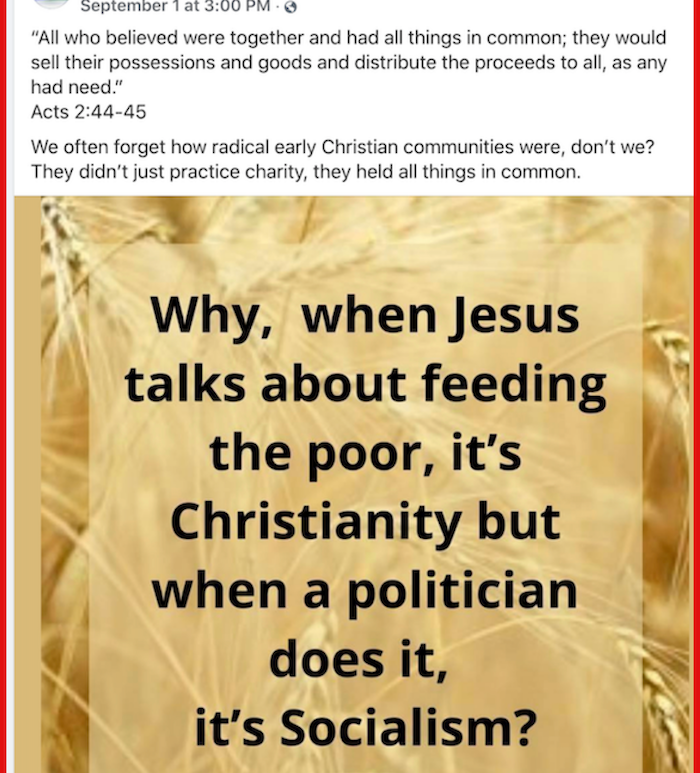
I know the Old Testament talks about a 10% thithe in several places but is this also applicable to Christians in the New Testament age? Some say yes and some say no.  It always impressed me when I read in the book of acts how Early Christians sold everything they had and gave the money to the Apostles for the community good.  Here are those verses:

Acts 4:32-35
All the believers were one in heart and mind. No one claimed that any of his possessions was his own, but they shared everything they had.  With great power the apostles continued to testify to the resurrection of the Lord Jesus, and much grace was upon them all.  There were no needy persons among them. For from time to time those who owned lands or houses sold them, brought the money from the sales and put it at the apostles’ feet, and it was distributed to anyone as he had need.

It is amazing to me that this happened. It would be totally unfathomable for this to occur in today’s world. The closest we probably came to this was the hippie communes of the 1960 :) . But almost as amazing is the total turn around that occurred just a few verses later. Here is that story:

Acts 5:1-11

Now a man named Ananias, together with his wife Sapphira, also sold a piece of property.  With his wife’s full knowledge he kept back part of the money for himself, but brought the rest and put it at the apostles’ feet.  Then Peter said, “Ananias, how is it that Satan has so filled your heart that you have lied to the Holy Spirit and have kept for yourself some of the money you received for the land? Didn’t it belong to you before it was sold? And after it was sold, wasn’t the money at your disposal? What made you think of doing such a thing? You have not lied to men but to God.” When Ananias heard this, he fell down and died. And great fear seized all who heard what had happened. Then the young men came forward, wrapped up his body, and carried him out and buried him.
About three hours later his wife came in, not knowing what had happened. Peter asked her, “Tell me, is this the price you and Ananias got for the land?”
“Yes,” she said, “that is the price.” Peter said to her, “How could you agree to test the Spirit of the Lord? Look! The feet of the men who buried your husband are at the door, and they will carry you out also.” At that moment she fell down at his feet and died. Then the young men came in and, finding her dead, carried her out and buried her beside her husband.  Great fear seized the whole church and all who heard about these events.

I guess Ananias and his wife Sapphira missed the orientation meeting that said you have to give everything. Having held some back (we don’t know how much?) they were struck dead!  I can certainly see where great fear struck others in the church!  I suspect it also drove many out.  I really don’t understand this story. Some say it is simply to make people aware that everything you have comes from God.  But that was a harsh lesson for poor Ananias to learn.

Do we need to feel obliged to give 10% of our income to the church?  From the latest data it seems that most Christians give less than 3%.  Where is that thunder bolt that should be striking them dead (ha). Aren’t we lucky that the Apostles are still not around. I’m afraid that the church population would be approaching zero if this event were repeated many times. Is this story a reporting of an historical event or is it just a parable/myth to teach us an object lesson?  I just don’t know but killing people because the didn’t give everything is a little troubling.

The Church Clubhouse?

Is there anything wrong with having a church be the social center for members’ families as well as a place to worship God? Many churches believe this configuration is totally wrong but in reality most, if not all, churches are to one degree or another clubhouses as well as churches.  Some believe the church/clubhouse is the core of the 21st century religious establishment. Should having fun be unrelated to doing church or to what extent should they be related? That is the basic question to be answered and it seems to have many different answers.

I don’t see anything wrong with being happy and having fun while praising God. But I’m sure many of you more stodgy Protestants think otherwise. To you praising God is a very serious thing and should not be a joy for us but a very serious event. This was also pretty much the case with Catholics up until the 2nd Vatican council that finally at least put the mass in native languages and then that was followed by the dreaded guitar masses :) . I don’t think anyone can deny that most mega churches make praising God a happy and family centered event. Some have coffee bars and some even have McDonalds restaurants to enjoy between events. Is this wrong? I am beginning to think not!

In studying the words of Jesus it is obvious that he had a sense of humor and was not opposed to having fun. After all the very first miracle he preformed was to make wine for a marriage celebration! So, it is obvious that he was not against taking drink in moderation or dancing or other such things that go on at wedding celebrations. Yes we should take praising God seriously but that does not exclude having fun doing it. To me celebrating my salvation through Christ is a joyous thing! As long as the church and its events are Christ centered and not people centered they will accomplish their task and allow the Christian family to have an enjoyable time doing it.

I will let the last post represent those parallel verses that are very similar to each other. In my studies those were somewhat typical of the conflicts of words. I know there are many places in the Old Testament that people report conflicting verses. I did not attempt to cover any of these but instead concentrated on Gospel accounts.  What I found were all somewhat like the previous posts.  The overall message was consistent but the words varied.

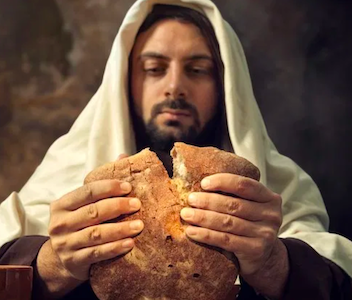
One final area of parallel verses that give me some reasons for concern is the last supper. Let’s look at those parallel verses. They appear in all four Gospel text:

Matt 26:26-29

While they were eating, Jesus took bread, gave thanks and broke it, and gave it to his disciples, saying, “Take and eat; this is my body.” Then he took the cup, gave thanks and offered it to them, saying, “Drink from it, all of you. This is my blood of the covenant, which is poured out for many for the forgiveness of sins. I tell you, I will not drink of this fruit of the vine from now on until that day when I drink it anew with you in my Father’s kingdom.

Mark 14:22-26

While they were eating, Jesus took bread, gave thanks and broke it, and gave it to his disciples, saying, “Take it; this is my body.” Then he took the cup, gave thanks and offered it to them, and they all drank from it. “This is my blood of the covenant, which is poured out for many,” he said to them. “I tell you the truth, I will not drink again of the fruit of the vine until that day when I drink it anew in the kingdom of God.” When they had sung a hymn, they went out to the Mount of Olives.

Luke 22:17-23

After taking the cup, he gave thanks and said, “Take this and divide it among you. For I tell you I will not drink again of the fruit of the vine until the kingdom of God comes.” And he took bread, gave thanks and broke it, and gave it to them, saying, “This is my body given for you; do this in remembrance of me.” In the same way, after the supper he took the cup, saying, “This cup is the new covenant in my blood, which is poured out for you.
But the hand of him who is going to betray me is with mine on the table. The Son of Man will go as it has been decreed, but woe to that man who betrays him.” They began to question among themselves which of them it might be who would do this.

John 13:1-8

It was just before the Passover Feast. Jesus knew that the time had come for him to leave this world and go to the Father. Having loved his own who were in the world, he now showed them the full extent of his love. The evening meal was being served, and the devil had already prompted Judas Iscariot, son of Simon, to betray Jesus. Jesus knew that the Father had put all things under his power, and that he had come from God and was returning to God; so he got up from the meal, took off his outer clothing, and wrapped a towel around his waist. After that, he poured water into a basin and began to wash his disciples’ feet, drying them with the towel that was wrapped around him. He came to Simon Peter, who said to him, “Lord, are you going to wash my feet?” Jesus replied, “You do not realize now what I am doing, but later you will understand.” “No,” said Peter, “you shall never wash my feet.”Jesus answered, “Unless I wash you, you have no part with me.”

The Eucharist, as it later came to be called, became one of the basic foundations of the Christian church. Unless this event was reported in a text that was not eventually included in the canon (I think the Gospel of Thomas may have a report of the Last Supper) these are the only words we have of institution of this sacrament.

  • Matthew includes the reason for the blood covenant is for the forgiveness of our sins. The other three writers do not mention this as a reason.
  • Luke reverses the event to do the cup first and then the bread. Luke is also the only writer that mentions that we are to do this in remembrance of Jesus. I find it strange that something that eventually became so foundational was only mentioned by one of the four witnesses and then only for the bread?
  • The apostle John as shown in the last text does not even mention anything about the sharing of the bread or wine. Did he think it was not of significant importance? Did he just decide not to mention it because is was already covered by the others? I just don’t know. But I do take notice that he instead replaced it with a call to service. Jesus came to serve and so should we.

When Martin Luther started the massive Protestant Reformation, or you could say revolt from the Catholic church, he adamantly spoke against five of the then seven sacraments that were being practiced. The only two he left standing was the Communion and Baptism. Should the bread/wine event have also been on his drop list or was it just too embedded by that time?

Quakers read the above words to mean that every time we partake of a meal we are to remember what Jesus did for us. They do not believe that Jesus intended to make this event some ceremonial thing as was typical of Jewish traditions at the time. While most Quakers don’t condemn the practice per say they say it is not dictated by God. They also take the words that John used to record this event are of equal importance, or maybe even more important, than the ceremonial sharing of bread and wine. I tend to believe that the Quakers again pretty much have it right. But having said that I do appreciate taking of the Eucharist as a time of special remembrance. But then again Jesus’ sacrifices should be in my daily thoughts and not just those times I am at the altar. I must alwasys remember that Jesus is constantly with me; not just those time where I share the ceremonial bread and wine with my fellow congregants.

Before we look at a few of the parallel verses in the Gospel accounts let’s see where there are no parallel accounts. John Chapters 1 through 4 have many of Jesus’ words that are not reported anywhere else. I don’t know if part of that is because John’s Gospel was written several years after the others so John could read Matthew, Mark, and Luke, before he wrote his. Of course the theologians over the years have noted that difference and have not included John as a synoptic gospel.

Enough of that; let’s look at some typical parallel verses.

Matthew 8:1-4

When he came down from the mountain, great crowds followed him.2 And behold, a leper came to him and knelt before him, saying, “Lord, if you will, you can make me clean.”3 And Jesus stretched out his hand and touched him, saying, “I will; be clean.” And immediately his leprosy was cleansed.4 And Jesus said to him, “See that you say nothing to anyone, but go, show yourself to the priest and offer the gift that Moses commanded, for a proof to them.” 

Mark 1:40-45

And a leper came to him, imploring him, and kneeling said to him, “If you will, you can make me clean.”41 Moved with pity, he stretched out his hand and touched him and said to him, “I will; be clean.”42 And immediately the leprosy left him, and he was made clean.43 And Jesus sternly charged him and sent him away at once,44 and said to him, “See that you say nothing to anyone, but go, show yourself to the priest and offer for your cleansing what Moses commanded, for a proof to them.“45

Luke 5:12-16

While he was in one of the cities, there came a man full of leprosy. And when he saw Jesus, he fell on his face and begged him, “Lord, if you will, you can make me clean.”13 And Jesus stretched out his hand and touched him, saying, “I will; be clean.” And immediately the leprosy left him.14 And he charged him to tell no one, but “go and show yourself to the priest, and make an offering for your cleansing, as Moses commanded, for a proof to them.”15 But now even more the report about him went abroad, and great crowds gathered to hear him and to be healed of their infirmities.16 But he would withdraw to desolate places and pray.

It seems pretty obvious that like many of the other parallel verses these reported the same incident. The words are pretty close to each other both in letters and intent but they are not exact. So, which words if any of them did Jesus actually speak? If the Bible is totally inerrant in all it’s words then the only explanation would be that he said the same thing three times; slightly different for each of the three witnesses. Since this seems pretty far fetched I am more inclined to believe that the writers simply wrote the words they best remembered. This seems to be the case for many similar instances of parallel verses. Let’s move on to the next one.

Matt 9:1-2

Jesus stepped into a boat, crossed over and came to his own town. 2 Some men brought to him a paralytic, lying on a mat. When Jesus saw their faith, he said to the paralytic, “Take heart, son; your sins are forgiven.”

Mark 2:3-5

4 Since they could not get him to Jesus because of the crowd, they made an opening in the roof above Jesus and, after digging through it, lowered the mat the paralyzed man was lying on. 5 When Jesus saw their faith, he said to the paralytic, “Son, your sins are forgiven.”


Luke 5:19-20

19 When they could not find a way to do this because of the crowd, they went up on the roof and lowered him on his mat through the tiles into the middle of the crowd, right in front of Jesus. 20 When Jesus saw their faith, he said, “Friend, your sins are forgiven.”  

I suppose it is possible that these three verses were from different times but I don’t think that is the case. Except for the beginning phrase and the surrounding text they are the same.

From my study of parallel verses it seems to me that the vast majority the variations are simply as the example above indicates a lack of being able to remember the exact words between the years they were said and then written down. Many antagonists of Scripture like to point out all the inconsistencies in the Bible. After studying this topic I, for the most part, simply did not find the difference to be that significant. Since I take the Bible to be inspired text written by men for men these minor inconsistencies just don’t bother me that much. Yes, there are some parallel texts that seem to say different things if that is what you are looking for. But for the most part the underlying messageremain the same.

Due to having frequent discussions with my “inerrant and literal” bible friend lately the Gospel messages have been on my mind. I know there are several places in the bible that supposedly report on the same event. If, as my friend, believes, every word in the bible is literally true and directly from God’s mouth (through the totally obedient hands of men’s pens) then why do the places that supposedly report the same thing use different words and sometimes seem to convey quite different meanings? I, personally take this to enforce my belief that the words are from men who either didn’t understand what Jesus was really saying or just forgot the exact words he used. The Gospels were generally written at least twenty years after the events reported so I can see where the events lost some clarity over the years. I know that is generally the case for me when I look back twenty years in my life. I can’t remember the exact words but do remember “some” of the events that I think played a significant part in my life. 

I think most Christians believe that Jesus is the absolute center of the Bible and the Gospels are about the only place where his direct words are recorded. So to me they take front and center in my study of what it means to be a disciple of Christ. I certainly don’t as my friend seems to say often believe that the Gospel writers were lying because they didn’t use the same words. They, like many of us today, were just at different stages of their understanding of what Jesus being Lord was all about. Even though they were inspired by God to write what the did doesn’t mean that their understanding of the events were from an identical mindset. The diversity of the reporting I believe adds to our understanding of the words of Jesus instead of taking away from it. We learn that different men saw things from different perspectives. I haven’t done much study the other writings of the times that were not included in the Bible but it certainly would have been interesting to hear a woman’s perspective of the Gospel accounts. It’s is a shame that Mary (Jesus’ mother) or Mary Magdalene did not get a spot in the New Testament list. They were both very involved in Jesus’ ministries and would have been faithful reporters.

Ok, so starting with the next post I will be spending some time looking at the parallel reports of the same events in the Gospels to see what I can glean from them. I will try to learn the different messages that the Gospel writer took from Jesus’ words. I will be using the NIV Bible for this study. I pray the Holy Spirit will guide me through this study to learn the messages that Christ intends. All glory and honor be to my Lord and Savior Jesus Christ.

Today being Memorial Day here in the U.S. I thought I would spend this post mourning all the children of God who have died in the world’s wars. This includes both the soldiers and those innocent civilians called “collateral damage” by the military complexes. Unfortunately wars and killing have been a fact of life for all of our existence. But this killing each other complex did not come from Jesus. He made it clear that we are to love even our enemies. I totally mourn all the times that people have rushed to war instead of trying all the other possible alternatives.

We seem to constantly send our young men and woman to the killing fields whenever our governments disagree with each other. It is also so strange to me that we  write much of our history around the wars we have engaged in. We seem to celebrate them instead of mourn them for their abject failure and the loss of human life that occurred. Every person who has ever lived on this earth has been totally loved by God. Whenever a life is extinguished God also mourns.

We humans just can’t seem to get our hands wrapped around the idea of alternatives to going to war with each other. To that end every generation has invented machines that make the killing easier. Shame on us. Lord bless all those  millions and millions whom have lost their lives during the wars of our country and the rest of the world.

Red Letter Messages….

Ok, I have probably spent too much time lately looking at the differences between us Christians and not enough time with personal revelation around the red letters. To ameliorate this condition I will try to spend more time reflecting on particular words of Jesus and what they mean to me. Of course along the way I will also have many questions. Some, given my current relation ship with Christ, I will be able to answer but many I will probably have to leave as a question. Let’s get at it.

Let’s start with Jesus talking about dying for our sins.

Matt 26:26-29

While they were eating, Jesus took bread, gave thanks and broke it, and gave it to his disciples, saying, “Take and eat; this is my body.” Then he took the cup, gave thanks and offered it to them, saying, “Drink from it, all of you. This is my blood of the covenant, which is poured out for many for the forgiveness of sins. I tell you, I will not drink of this fruit of the vine from now on until that day when I drink it anew with you in my Father’s kingdom. 

Of course the last supper is the most obvious place where Jesus says he will pour out his blood for the forgiveness of sins. He mentioned dying for our sins shortly after Easter.

Luke24:45-47

Then he opened their minds to understand the Scripture and said to them, “Thus it is written, that the Christ should suffer and on the third day rise from the dead, and that repentance and forgiveness of sins should be proclaimed in his name to all nations, beginning from Jerusalem.”  

I think it was up to the early theologians to put down reasons why Jesus had to die. But Jesus did make it clear, at least in these verses, that one of the reasons he came was to die for our sins. But we must also remember how Jesus opened his three year ministry with the following words.

Luke 4:16-21

“The Spirit of the Lord is on me, because he has anointed me to preach good news to the poor. He has sent me to proclaim freedom for the prisoner and recovery of sight for the blind, to release the oppressed, to proclaim the year of the Lord’s favor.” 

He came to die for our sins but he also came to show us how to live.

Pentecost on my mind…

Pentecost2

Yesterday being Pentecost, and the fact that I just finished posting a series on the Holy Spirit, it is on my mind. After again reading the dramatic account of the Holy Spirit coming to the apostles and others in that closed and hidden room I had a serious question suddenly pop into my mind.  Are we ignoring our small messages from the Holy Spirit and therefore also keeping the big ones from occurring in our lives? 

I don’t expect that the Holy Spirit uses the flaming heads much anymore but I do believe that he come to each of us in varying degrees throughout our lives.  Like most things we need to take baby steps before we can leap. Holy Spirit baby steps are those times in our lives when the Holy Spirit nudges us in one direction or another.  After recognizing enough baby steps I think we graduate on to more significant messages.

If we are ignoring those baby nudges are we preventing the Holy Spirit from leading us into the knowledge that we were not yet ready to hear before that time?  I think for many that might be the case. Some say that when we are baptized as children the Holy Spirit comes into our lives.  That might be true but I am certain that is not the only time he is with us.  By failing to recognize the fact of his continual presence maybe our baptism rituals are actually getting in the way of our growth as disciples of Christ??

Some say the “real” baptisms of the Holy Spirit come throughout our time on earth. By seemingly putting all the power on the first one we might actually be preventing recognizing and acting on  the others.  Just some thoughts that suddenly occurred to me today.

Come Holy Spirit, come……

Give them Jesus

There are thousands of different concepts and ideas floating around in Christianity and most of them have followers who have split from others over their specific views. Of course the biggest split started when a lowly monk decided he knew better than the Pope what God was really about. There are those who have split off other denominations because they believe that total immersion is the only way to receive a “correct” baptism and, of course there are those who choose different views of the Bible. Some say every word is literally true and some say only the doctrinal messages are true. There are literally hundreds of other excuses we Christians have used to divide ourselves into different flocks.

While the people involved in all these 35,000 or so splits take very seriously the reasons they believe it was necessary to go their own ways. When I think about them the book title by Richard Carlson entitled “Don’t sweat the Small stuff (and it’s all small stuff)” comes to mind. The front and center for all of us who call ourselves Christians must be Jesus Christ; everything else is just small stuff. I can hear some of your saying” NO that is not true. If you aren’t baptized correctly then you are going to hell!!” Or other such words. I hope some day we all realize how petty we have become over many of these issues.

I have spent the last several years studying perhaps a hundred books on theology. In that study I have basically found that for every thinkable concept of God there are many human versions of what that concept means. Things like the Trinity really don’t matter in the grand scheme of things. Whether God is three in one or just one really doesn’t matter much. God is God and can be whatever he chooses to be and in my mind what he chooses to be is a God of agape love.

One of the basic things that does matter is why Jesus came among us? This question also seems to have many answers for us. Most, but not all, Christians believe that he came to be an atoning sacrifice for our salvation. As I have mentioned a few times in the past I don’t really understand this concept but do accept it on faith. Some say he also came to teach us lessons on how to live our lives in the universe he created. I am definitely in that camp but there are quite a few who almost totally discount this aspect of Jesus’ life. They believe that Jesus’ sole purpose was to die for our sins and to point us to heaven and that anything else he did or said about living was at best irrelevant to the “real” issue. They are totally convinced that it is proper to jump from Jesus’ birth immediately to his death. Nothing in between has much significance. Calling anything God says or did irrelevant is a pretty risky thing to me! Of course, Calvinists are among this group but I think many other fundamentalist denominations join them. To shortchange Jesus’ teachings on how to live causes them, in my opinion, to lose out on understanding of who Jesus really was. I feel sorry for them in that regard.

Let’s not spend much of our day worrying about what God looks like and instead spend it concentrating on what Jesus said and did while he was among us. All the other stuff is just stuff that causes us confusion and gets in the way of this central message. Jesus opened his three year ministry with the following words:

Luke 4:16-21

“The Spirit of the Lord is on me, because he has anointed me to preach good news to the poor.

He has sent me to proclaim freedom for the prisoner and recovery of sight for the blind,

to release the oppressed, to proclaim the year of the Lord’s favor.”

I would hope that all of us take at least these words to heart in calling ourselves disciples of Jesus Christ. But sadly that is not the case for some of us. So to end this, concentrate on Jesus and all the other minor details will resolve themselves.

In doing this study on the Holy Spirit I am not convinced that I really know how to envision him even now. To me it sounds like he dwells in each of us and always has but came into the theological forefront after Jesus bodily left us to go back to the Father. There are numerous instances of the “Spirit of God” talking to even the Old Testament writers. It is hard to think of the Holy Spirit as a being instead of just a spirit. I still imagine him as that little angel in movies that sometimes appears on peoples shoulders as they need to make a decision about something.

The idea of the Holy Spirit being equal with the Father and Son (i.e. the Trinity) was developed fairly late in Christian history. Given how little historical writings about the Holy Spirit there seems to be I can certainly understand this. One thing I did learn from this series of posts is that baptism is not as defined as I thought it was. It was made very clear to me from this study that water baptism is not what Jesus was talking about; he was clearly talking about radical life changes due to the indwelling of the Holy Spirit. Water baptism may symbolically cleanse us of our original sin but the baptism by the Holy Spirit is where it really matters. Some think they are one and the same, I just have doubts about that.

So, at least to me I cling to the words of Jesus where he told us he was sending a Holy Counselor. That is someone who will take his place in encouraging us to do good; rebuking us when we fail to do so; telling us things when we are ready to hear them; and keeping us constantly aware that while on the earth we are to follow Jesus in both what he said and did. That is, Jesus is to be our Lord as well as our Savior. The Holy Spirit is about those messages we receive from Jesus and the Father as we go about our daily living. The original apostles seemed to get almost daily messages from the Holy Spirit to guide them in the early church. I think that most of us modern day Christians have pretty much crowded him out of our thoughts and that seems to be a dreadful mistake. We must all learn again listen to what he is saying. In order to do that we must “Be Still and Know that He is God”. I have been studying a book by a Quaker minister on just how to quietly listen for God’s messages. I will likely be posting a review soon. In the mean time be still and listen for the messages. Don’t let the urgencies of today’s world crowd them out. They are there; it is just a matter of allowing them to get through to our overstressed minds and hearts.

But maybe in the end I have to align again with Quaker beliefs. The Trinity is pretty much a theology issue and is not really of that much importance. So, maybe I really shouldn’t be too concerned about it. God is God no matter what form he chooses to reveal himself to me. It is up to me to listen to what he says both in the Bible and through his personal messages.

This time we will be looking at the method and means the Holy Spirit uses to convey messages to us.

Acts 13:1-4

In the church at Antioch there were prophets and teachers: Barnabas, Simeon called Niger, Lucius of Cyrene, Manaen (who had been brought up with Herod the tetrarch) and Saul. While they were worshiping the Lord and fasting, the Holy Spirit said, “Set apart for me Barnabas and Saul for the work to which I have called them.” So after they had fasted and prayed, they placed their hands on them and sent them off.  The two of them, sent on their way by the Holy Spirit, went down to Seleucia and sailed from there to Cyprus.

Acts 15:24-29

We have heard that some went out from us without our authorization and disturbed you, troubling your minds by what they said. So we all agreed to choose some men and send them to you with our dear friends Barnabas and Paul— men who have risked their lives for the name of our Lord Jesus Christ. Therefore we are sending Judas and Silas to confirm by word of mouth what we are writing. It seemed good to the Holy Spirit and to us not to burden you with anything beyond the following requirements:You are to abstain from food sacrificed to idols, from blood, from the meat of strangled animals and from sexual immorality. You will do well to avoid these things.

Acts 16:6-7

Paul and his companions traveled throughout the region of Phrygia and Galatia, having been kept by the Holy Spirit from preaching the word in the province of Asia.

Acts 20:22-24

“And now, compelled by the Spirit, I am going to Jerusalem, not knowing what will happen to me there. I only know that in every city the Holy Spirit warns me that prison and hardships are facing me. However, I consider my life worth nothing to me, if only I may finish the race and complete the task the Lord Jesus has given me — the task of testifying to the gospel of God’s grace.

I chose the above four reading to show that the Holy Spirit sends messages to us. This seemed like a routine thing to the apostles and other early Christians. The Holy Spirit seems to have directed them as to where to go and what to do when they get there. Do we get those kind of messages today if so do we really listen for them?

Another thing about messages from the Holy Spirit from earlier posts are that people back then seemed to know if they didn’t have the Holy Spirit. Peter and other asked if the new converts had received the Holy Spirit and they often said “No we haven’t but we have been baptized” or “No we have not been informed that there is a Holy Spirit”. They seemed so sure that they have not received him in their comments. How could they know that they don’t have something? That is strange to me.

At one particular moment in my life I think I did receive a clear and distinct message from the Holy Spirit. That moment brought me to tears. I wish I could report others like it but I can’t truthfully do that. I think I need some lessons in how to effectively listen. I am hoping to discover them in the days/weeks/years ahead. Come Holy Spirit come.

Lets continue with our study of the relationship between the Holy Spirit and baptism.

Acts 11:15-17

“As I began to speak, the Holy Spirit came on them as he had come on us at the beginning.
Then I remembered what the Lord had said: ‘John baptized with water, but you will be baptized with the Holy Spirit.’ So if God gave them the same gift as he gave us, who believed in the Lord Jesus Christ, who was I to think that I could oppose God?”

Here is another one:

Acts 19:1-5

While Apollos was at Corinth, Paul took the road through the interior and arrived at Ephesus. There he found some disciples and asked them, “Did you receive the Holy Spirit when you believed?” They answered, “No, we have not even heard that there is a Holy Spirit.” So Paul asked, “Then what baptism did you receive?” “John’s baptism,” they replied.

Paul said, “John’s baptism was a baptism of repentance. He told the people to believe in the one coming after him, that is, in Jesus.” On hearing this, they were baptized into the name of the Lord Jesus.

Ok, lets look at these two sets of verses about the Holy Spirit and baptism. Is Acts 19 talking about two forms of baptism here, John’s baptism of water and another in the name of the Holy Spirit/ Jesus? I can only make sense of this if that is so. It seems clear that baptism by water is of less significance compared to being baptized by the Holy Spirit. When Jesus said go and make disciples and baptize them in the name of the Father, the Son, and the Holy Spirit was he talking about water baptism or something else. Quakers believe that the baptism by the Holy Spirit comes to each of us in it’s own time and has little to do with the water part that John The Baptist instituted. John’s baptism was for repentance and the Holy Spirit’s baptism was to bring God into our hearts. Or I could say to release God from our hearts, where He has always been, and into our conscience so that we can live as the wants us to live.

Some say there are two types of Christians. Carnal Christians and Spiritual Christians. Carnal Christians are Christians in name only. They have been baptised but only with water. Spiritual Christians are those that have turned their body over to Jesus to do as he says. These are the Christians who have received the Holy Spirit. I don’t think I really agree with this premise but the concept behind it does have some validity.

This time we will look at the relationship between the Holy Spirit and Baptism. Are they one and the same?

Let’s start with Peter in Samaria.

Acts 8:14-19

When the apostles in Jerusalem heard that Samaria had accepted the word of God, they sent Peter and John to them. When they arrived, they prayed for them that they might receive the Holy Spirit, because the Holy Spirit had not yet come upon any of them; they had simply been baptized into the name of the Lord Jesus. Then Peter and John placed their hands on them, and they received the Holy Spirit. When Simon saw that the Spirit was given at the laying on of the apostles’ hands, he offered them money and said, “Give me also this ability so that everyone on whom I lay my hands may receive the Holy Spirit.”

These verses point out something I believe is very significant. That is being baptized with water is not the same thing as being filled with the Holy Spirit. Many Christians today believe that the two are the one and the same. These verses clearly say otherwise; at least in this instance. The people in Samaria had been baptized but did not have the Holy Spirit until Peter placed his hands on them. This display of bringing the Holy Spirit definitely had an effect on someone named Simon as he tried to buy the power for himself!

So, if the Holy Spirit does not automatically come to all those who are baptized what circumstance causes him to come to believers? Here is an instance where the Holy Spirit came to those who had not yet been baptized.

Acts 10:44-48

While Peter was still speaking these words, the Holy Spirit came on all who heard the message. The circumcised believers who had come with Peter were astonished that the gift of the Holy Spirit had been poured out even on the Gentiles. For they heard them speaking in tongues and praising God. Then Peter said, “Can anyone keep these people from being baptized with water? They have received the Holy Spirit just as we have.” So he ordered that they be baptized in the name of Jesus Christ. Then they asked Peter to stay with them for a few days.

Besides for the baptism/Holy Spirit reversal these verses have other significant consequences. Early in Acts Peter received a message from God that he was to go among the Gentiles to give them the message of Jesus Christ. Up until that point I don’t think the Apostles really understood that Christianity was meant for both Jew and Gentile. Of course, it was later decided that Paul would be the one to go among the Gentiles and Peter was to pretty much stay among the Jews. So I guess God changed his mind as to who he would send. But that is another story. I have might have no biblical foundation for this belief but I think that receiving the Holy Spirit is what really makes a person a Christian and the baptism part it like a rite of initiation or a ritual as was typical of Jewish traditions at the time. I believe that the Jewish ceremonial aspects are the primary reason that Peter mentions water baptism after the Holy Spirit baptism.

 Let’s look at the book of Acts to try and understand just who the Holy Spirit is and what his purpose is. In our previous study, along with some confusion, we learned that the Holy Spirit is a being who Jesus referred to a “him” is not purely a spiritual presence. Ok, let’s go through some of the references to the Holy Spirit in the book of Acts. This time we will look at when the Holy Spirit came in a dramatic fashion

Acts 1:4-5

Do not leave Jerusalem, but wait for the gift my Father promised, which you have heard me speak about. For John baptized with water, but in a few days you will be baptized with the Holy Spirit.” 

Of course these are the words of Jesus after his resurrection and he is referring to what we call today the Day of Pentecost. Jumping ahead for a few moments it was obvious that the apostles were very changed men after they received the Holy Spirit than they were before. You could say that the Holy Spirit finally gave them the incentive to loudly boast of the Lord. They obviously lacked this ability before the Pentecost.

Another thing worth noting about the above verse is that Jesus is somewhat minimizing the water baptism of John when comparing it to the baptism of the Holy Spirit. This is one of the reasons that Quakers, as we studied a few posts ago, put all the emphasis on the baptism of the Holy Spirit and do not really celebrate water baptism as they believe that water baptism is more of a ceremonial event in line with other previous Jewish traditions than an actual sacrament . The sacrament comes from the Holy Spirit not from the water event.

Ok, lets move on to another reference in the first chapter of Acts:  

Acts 2:1-4

When the day of Pentecost came, they were all together in one place. Suddenly a sound like the blowing of a violent wind came from heaven and filled the whole house where they were sitting. They saw what seemed to be tongues of fire that separated and came to rest on each of them. All of them were filled with the Holy Spirit and began to speak in other tongues as the Spirit enabled them.

I believe that I get messages from the Holy Spirit but never in such a dramatic fashion! It is obvious from the accounts after this one that the Holy Spirit was a force to be accounted with. The difference in the apostles was almost night/day. I know the “speaking in tongues” part many give special meaning to. I am not going there with this post. Maybe I will address it later but not now as I think it would only dilute the conversation at this point.

Acts 4:31-35

After they prayed, the place where they were meeting was shaken. And they were all filled with the Holy Spirit and spoke the word of God boldly. All the believers were one in heart and mind. No one claimed that any of his possessions was his own, but they shared everything they had. With great power the apostles continued to testify to the resurrection of the Lord Jesus, and much grace was upon them all. There were no needy persons among them. For from time to time those who owned lands or houses sold them, brought the money from the sales and put it at the apostles’ feet, and it was distributed to anyone as he had need. 

This is yet another bold demonstration of the Holy Spirit’s power. When they were filled with the Holy Spirit it seems that selfishness was washed out of them and they were indeed their brothers keeper. What an awesome display of Christ like attitudes.

In these passages we have studied it seems that there was little doubt as to when the Holy Spirit came to them. He came with: violent winds, shaking houses, fire, and total selflessness. Why shouldn’t we expect the same today?

The 16th Chapter of the John comes to mind most frequently when we think of Jesus giving us the Holy Spirit. Here it is:

John 16:12-15 NIV

“I have much more to say to you, more than you can now bear. But when he, the Spirit of truth, comes, he will guide you into all truth. He will not speak on his own; he will speak only what he hears, and he will tell you what is yet to come. He will bring glory to me by taking from what is mine and making it known to you. All that belongs to the Father is mine. That is why I said the Spirit will take from what is mine and make it known to you.

Jesus spoke these words just before he was turned over for crucifixion. This was probably the last time he had alone with the original eleven apostles. He clearly says that the apostles could not understand many of the things Jesus wants to tell them. The way these words are framed it appears that the “Spirit of truth” is very subservient to Jesus and not an equal member of the Trinity as commonly shown today. It sounds like the Holy Spirit is just a mouthpiece for Jesus. Putting that aside we come to another aspect of the Holy Spirit that needs to be addressed. Most think that the Holy Spirit is just that, a spirit and not a being. Of course being portrayed as a dove just re-enforces that idea. But Jesus, and the apostles in the book of Acts, clearly refers to the Holy Spirit as “him”. This would seem to indicate that he is a being.

To raise another basic question was the mission of the Holy Spirit only to come to the Apostles or is he meant to be our counselor as well? That is, is the Holy Spirit around today to guide us through our lives with the lessons that Jesus said we were not yet ready for? Could we still be learning things that we were not yet ready to learn even in the future?  Of course, we will investigate this much more in the coming posts when we study what the book of Acts says about him.

Let’s look at a couple of other places in the Gospel text that talk about the Holy Spirit.

Luke 12:8-12

“I tell you, whoever acknowledges me before men, the Son of Man will also acknowledge him before the angels of God. But he who disowns me before men will be disowned before the angels of God. And everyone who speaks a word against the Son of Man will be forgiven, but anyone who blasphemes against the Holy Spirit will not be forgiven.

“When you are brought before synagogues, rulers and authorities, do not worry about how you will defend yourselves or what you will say, for the Holy Spirit will teach you at that time what you should say.”

Matt 12:30-32

“He who is not with me is against me, and he who does not gather with me scatters. And so I tell you, every sin and blasphemy will be forgiven men, but the blasphemy against the Spirit will not be forgiven. Anyone who speaks a word against the Son of Man will be forgiven, but anyone who speaks against the Holy Spirit will not be forgiven, either in this age or in the age to come. 

It looks like these two sets of verses probably reported the same incident but with some different words and possible meanings. Of course Matthew was there to hear these words from Jesus. Luke’s version was probably relayed to him via a third source so maybe that may be the cause of the variation. I can only guess whether Luke’s source was an eyewitness. But I am getting off track here. This reference to the Holy Spirit is much different than the first one I cited. Is Jesus talking about two different entities? I just don’t know. The only way I can reconcile these stories is to take where Jesus calls the spirit “the Spirit of Truth” and say he is talking about “truth” here then maybe this makes sense. But then “truth” is not a person as Jesus clearly stated in the first verse?  Taking that aside, he might be saying that if you deny the truth you are denying the Holy Spirit. One of the study Bibles I use refer to this as someone who would attribute to Satan the miracles done by Christ. In many of today’s Christian denominations we espouse that no matter what your sin is Jesus forgives you. These verses seem to say that at least for this sin you are not forgiven.

The Holy Spirit – Part 1

Having just finished up an extensive set of posts on Quakers, the Holy Spirit is on my mind. So I am now going to concentrate on what the Gospels and book of Acts say about the Holy Spirit. This is going to be a seven part post so please bear with me. I find myself tackling tough theological issues lately. I will try to get back to my regular shorter discussions after this one of complete. But no promises.
Except for a book by Billy Graham that I read years ago I have not studied any theologians’ views of the Holy Spirit so this round is going to pretty much just me and how I personally interpret the biblical words about the Holy Spirit. From my exposure to Christianity the Holy Spirit seems to be the much forgotten member of the Trinity. I know that any three legged stool will sit without rocking but it seems that the Christian stool of the Trinity is very unbalanced. Given the extreme emphasis on biblical text by many Christian sects, to the almost exclusion of messages from the Holy Spirit it seems that at least some Christians would like to rename the trinity as The Father, Son, and Holy Bible!  

The most often used icon related to the Holy Spirit is a bird. Yes, the dove does have biblical connotations but I think the image itself tends to diminish the Holy Spirit’s perceived status among Christians and others. While almost all of us love birds they just don’t have the stature of the “old bearded man” that usually depicts God the Father, or the stately European figures that we often see of Jesus. Another is the name given to him by some of the Bible versions around today which is the Holy Ghost. Ghosts have a much different context now than they probably did in biblical times. We have all watched movies like Ghost Busters; that is not what Jesus had in mind when he talked about his partner! Some of us even remember the cartoon Casper, the Friendly Ghost. While he had a more cuddly demeanor, that was also not what Jesus had in mind. So, to me the Holy Spirit is getting a bad rap by many people today. Let’s try and set the record straight :) .  

Just what does the New Testament say about the Holy Spirit? That is what I will be investigating. Quakers believe that the Holy Spirit gives each of us personal revelations including how to live our lives. They also believe that they are closer to the beliefs of the early Christians than most other sects around today. These posts will, among other things, concentrate on just how the Holy Spirit interacted with the apostles and other early Christians. 
 In my mind, the Holy Spirit is probably the least understood member of the Trinity especially among most Protestants and to a large degree even Catholics. As we begin this trek I have to give you the same caveat that I always do. I am not a theologian or a religious scholar. I am just an ordinary guy who wants to know more about the God that I truly love above all else. If you have any differing opinions about anything I say I welcome your input. As long as it is in line with Code of Conduct as indicated by the blog page above.

This will be an interesting study for me and I hope for you.

My wife and I watched a DVR copy of the recent TV movie entitled “Amish Grace” last night. This is the movie about the man who shot ten girls in an Amish school house a few years back and then took his own life. Six of the girls died. The main theme of the movie was about forgiveness and not letting hate overpower you. The Amish community in Pennsylvania where it happened quickly forgave the man who committed the act and even helped the family of the murderer cope with the tragedy. As I have mentioned in the past the commitment to God that the Amish have totally impresses me. Fortunately the movie did not focus on the brutal act itself but instead on the forgiveness. It would have been very easy for most people who experienced this kind of tragedy to be filled with hate for the perpetrator.

This movie got me to thinking about just where hate comes from. Many discount the works of Satan in this world. They say that he is not a real being but instead just a concept. But I do believe that Satan exists and that hate is his primary tool for ensnaring his victims. It seems that there is much hate in the U.S. today so I guess I would say that Satan might be getting a strangle hold on us as a society. Being a U.S. history buff I am well aware that political partisanship has been a constant in one degree or another throughout our history. But I believe that it is morphing into something much more dreadful in very recent years among some of us. This is evidenced by the recent decision of several well respected people in congress who have decided to not run for re-election this year. Most often one of the primary reasons for not running is the tainted atmosphere in Washington today.  

On a recent trip to Kansas I visited the high school that has been turned into a memorial to the Brown vs. the Board of Education lawsuit that started racial integration in the 1960′s. One picture on a wall is of a young girl, probably in the late teens, that is screaming at one of the black kids entering the segregated high school in Little Rock. I had seen this picture several times before but for some reason this time the pure hatred on the face of the girl totally struck me. I included a photo of it at the top of this post and as you can see it was a very scary thing. I often wonder about that young girl and how her life might be today. I have even said prayers for her even though I don’t know her. But that was not the last time I have seen that same look. It was also evident on several faces in the recent Tea Party rally in Washington that was protesting the healthcare reform law that recently passed. Their very antagonistic placards were also evidence of that hatred. Now I am not saying that all people in that rally were hateful but the ones shown in those pictures definitely were filled with hate. It was obvious from their faces and their signs. It was again a scary reminder of Satan’s presence in the world today.  

“Filled with hate” is a very appropriate term. Hate starts out grabbing a small corner of our minds but if we don’t let it go it then, much like an aggressive cancer, it quickly overtakes much of the person’s total being. That is why there are numerous places in the bible where God tells us to fill ourselves with love, even for our enemies. He wants us to never allow hate even start within us. If we allow hate into our minds we are giving Satan a grip into our very souls. I know, given some circumstance such as the Amish incident I started the post out with, it is very difficult to not hate someone or something. But we, especially us Christians, must be very aware of the deadly affects of hate and fight it back when it crops up in our minds. We can disagree with someone but still love them. Hate simply does not have any place in a Christian’s life.

The Bible is like….

The last post I attempted to report the basic differences between the two major views of the Bible. This time I am going get a little artsy and make a meager attempt to try to compare these views to the concept of the “Bread of Life”.

  • The Literal and Inerrant View see the Bible as a completed loaf of bread coming directly from God. There is nothing to be added and every part is equally nutritious. No crumbs are any more valuable than any other. The bread is already baked and sliced so there is nothing left for them to do except sit back and enjoy its nourishment.  
     
  • The Inspired Writings View see the Bible as more of a wheat field. First it has to be harvested. To begin that they have to break off the stems which are the non essential words and stories around the messages to be received. Next we have to remove the chaff which is the words from the minds of man alone that were not inspired by God but instead were just relating current facts and sometime personal opinions. Since the chaff is very near the nourishing kernels this is often a difficult process. Then we get to the actually basket of wheat. The wheat must then be ground up and made into flour and then assembled with other ingredients then baked. This is comparable to studying the many words of the Bible to understand the overall messages and not fixate on any one kernel. Finally the finished loaf is the inerrant messages from God.  

The literalists just can’t conceive or at least refuse to think that bread needs to be made and that takes a harvester, miller and a baker to accomplish this. Instead they, somewhat like the Mormons, believe that the Bible basically fell down from heaven through the totally subservient pens of a handful of men.

The Inspired group can’t understand why the literalist can’t see that bread starts out as wheat in a field. Since each group comes at the Bible from a completely different perspective neither seem to be able to understand the other.

Biblical Views…

Given the recent blog discussions between myself and a person who takes the literal inerrant view of the Bible I want to spend a few minutes on that subject. There are basically two views on how to interpret Biblical text:

  • Literal and Inerrant Approach – People who espouse this view believe that absolutely every word in the Bible is written by God through human authors. Therefore everything in the Bible is absolutely and literally true as God is not capable of anything else. To those people, among other things, the earth is around 5,000 years old and was created in six 24 hour days and Jonah indeed spent three days in the belly of a whale.


  • The Inspired Writings Approach – These people believe that the Bible was written and assembled by human beings and that much of the writing was inspired by God. This group believe that although all of the Bible is useful for teachings it did not come totally from God but instead has a very human aspect. They believe that much of the Bible was gleaned from verbal accounts passed down from one generation to another. They also interpret some of the text to be stories, similar to the parables of Jesus, so they are not necessarily literally true except in the messages they convey.  

The proponents of these two Biblical approaches each treat the Bible as a holy document worthy of constant study throughout their lives. Those who believe in the Inspired Writings Approach seem to have tolerance for those in the other camp. But, in some cases those who believe in the literal and inerrant approach are much more defensive. To that end they think they must therefore attack anyone with a different viewpoint in an attempt to prove them wrong. They say that carbon dating and all the science that shows the world is millions of years old is just God tricking us. They believe that the creation text couldn’t possibly be just a story  used to relay a message; it has to be literal fact to them.

The literalists mostly believe that God quit giving revelations after the last book of the Bible was written. To them there is nothing that can be added or subtracted from the current biblical text. The inspired writing believers for the most part think that God continues to give us messages today that sometimes those messages are in addition to the Bible but they are most often a re-enforcement or personalization of current biblical messages. Some literalists seem to believe that most revelation that people think they get today is really from the devil  or other sources and not God.  The Catholic church, which makes up the majority of Christians, also believe that God gives us revelation through the Pope and church traditions.

It is sad to me to see the warring that goes on between these two groups. There is so much kingdom work to be done we shouldn’t be wasting our energy battling each other! But then this is not the only place were Christians battle each other over our human understanding of God. There are literally thousands of divisions in the Body of Christ over this and similar issues. This greatly saddens me.

Older Posts »